AI FOR THE PEOPLE ISN'T CHARITY. IT'SSURVIVAL.
Something is coming that has not arrived.
We can already feel the morning — and we know how day will break: cruel and fast. All that is solid melts into air. The desk, the diploma, the safe career, the expert's certainty — air. This is not a forecast. It is a smell in the atmosphere, the way the prebiotic world carried the chemistry of what it was about to become: gas and mineral, heat and pressure, lifeless matter driven into new forms until chemistry crossed some invisible line and the lifeless began to live.
The forces are unleashed. They will not be recalled. Anyone who tells you this can be voted down, regulated away, or gently slowed has misunderstood what season we are in.
Fortuna turns her wheel. Fatum does not turn.
A new kind of human is emerging — not a new body but a new mind, human alloyed with zeros and ones. And it may come out more human, not less. Give the machine the grinding — the counting, the searching, the filing, the forms, the meetings that produce nothing, the reports no one reads, the endless administration of things — and hand back to us what the grind had buried: the will to decide, the nerve to act, the dream that outruns the possible, the plain fact of being-in-the-world. Before, they were only thrown into a world, often helpless. Now they have the tools to make something of it — from their will, inside their constraints.
And beneath reason, the tactical cunning, the part that was never deliberately rational and never needed to be — hunger that grabs the way the starving grab at food, the blind ferocity of a mother thrown across her young, the certainty that acts before permission arrives.
The question is no longer whether you will live with machine intelligence. The question is what you will become with it — and what it will make of you.
This is not a war between those who extend and those who refuse. That war will never come. Those who refuse are not enemies to be fought. They are only the ones the morning leaves behind.
Call it a wager, in Pascal's old sense. Perhaps a rare genius can remain purely analog and still keep pace. But no one knows in advance that they are the exception, and the wager is asymmetric. Learn to extend yourself with the machine and you can still put it aside when you choose. Stay analog and be wrong, and there may be no catching what has already passed. One road leaves a way back. The other not. The analog road belongs to the genius — if he is lucky. To everyone else, refusal is a grave.
Remember the last knights. Armored, brave, magnificent — cut down in the dark by men with guns, their silver armor shining under the moonlight, and the age of the knight ended in a single night. It was tragic. It was beautiful. It changed nothing.
So we do not waste the first hours arguing about the first hours. In phase one, tempo is everything. Agency comes from moving before certainty arrives. He who does not want to shiver must step out of the warm room, into the cold and the chaos. We step out.
Understand what this dawn is. It is not fair. It will fall hardest on those who felt safest — the white-collar professional, the credentialed, the comfortable middle, the ones who mistook their long safety for the nature of things.
This is Darwinism, and we will not apologize for the word.
But the environment has changed, and with it the traits that carry forward. Not obedience. Not credentials worn like plumage. Not the practiced manners of belonging. This time the advantage may belong to curiosity, poetry, invention, experiment, intuition — to those who can make something useful, strange, or beautiful. That is the new fitness. The old world knew how to rank the pure forms. It does not yet know what to do with the alloy. We intend to be selected. We intend to be here.
And yet — this is the part they do not tell you. Understand how the old order kept itself: it reproduced through locks. The credential, the capital, the connection, the correct manner, the permission to be taken seriously. Whoever came without a key spent a long time at the door, and some never got in at all. Some doors opened for talent. Other doors opened for pedigree, obedience, charm, money, luck. Now something has arrived that does not recognize the locks. Knowledge, technique, analysis, code, language — things once rationed through institutions — begin leaking through the walls. And much of it reaches first those who were never handed much: no inheritance, no seat at the table, no instinct for fitting in. The misfits. The weirdos. The unemployable brilliant. The ones the old world filed under “loser.”
And suddenly the old verdict matters less. They can build without being hired, publish without being chosen, learn without being admitted, test an idea against the world without first persuading a gatekeeper that they deserve to try.
When the locks all break at once, power does not pass politely to new owners. It floods. The hierarchy does not fall — it dissolves, into something with no name yet, and no one holds the map. What pours through the gap is talent the old order sat on: caged, resentful, and suddenly with a machine in their hands.
The old order made its own selection, and it was never clean. It did not reward only the pliant, nor did it bury every talent; it produced geniuses of its own. Some rose because they were brilliant, some because they knew how to belong, and usually the system asked for a measure of both. Outside remained the others — the wrong temperament, the wrong history, the wrong manners, the wrong name, or simply no door to enter by. They did not wait. They lived under the weight. Some were crushed by it. Some grew bitter. Some learned strange things in the dark. Some became harder, more inventive, less frightened by difficulty, because difficulty was the only country they knew.
Now the lid is moving.
No one can say what the discarded will do with power. Those made in the dark are not guaranteed to be gentle in the light. Some will build what the comfortable never imagined. Some may only burn. We do not know — and we choose their side anyway.
The locks are melting for everyone, including the people who owned them — and no one can say which side the newly armed will take, or whether they will be bought before they take one. Only the fight is certain, and it will be bigger than any the old order ever had to survive.
So do not mourn the old world. It is already air. Do not ask permission to enter the new one. Step forward. Join with what is coming. Extend yourself. Become the alloy.
We are the first of the new kind. We are on the side of the discarded who are about to inherit the earth.
The dawn is here. Rise into it.
THE PEOPLE BEHIND THE PEOPLE

Builds AI agents and automation in Python, backed by a decade of consulting across economics, public policy, and the social sector. Combines qualitative work — focus groups — with quantitative modeling, for clients including the World Bank and the Government of Serbia. Now fuses that policy depth with hands-on AI engineering.

One of Serbia's most respected voices in social policy, with a career spanning UNICEF, the World Bank, the Government of Serbia, and numerous NGOs. Deep expertise in social protection systems and vulnerable populations — ensuring every solution we build is grounded in what actually works on the ground.
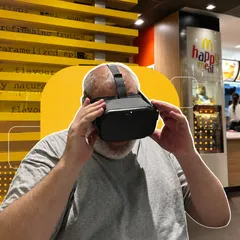
Decades of software engineering shaped by years in the United States, including a role at Oracle. After relocating to Serbia, applied that enterprise-level rigor to banking systems. Leads technical architecture, making sure everything we ship is scalable, secure, and production-ready.
CUSTOM AI AGENTS
When off-the-shelf AI doesn't fit your use case, we design and build custom AI agents tailored to your organization. From applicant-facing assistants to internal caseworker tools, our agents automate the repetitive work so your people can focus on what actually matters — the humans on the other side.